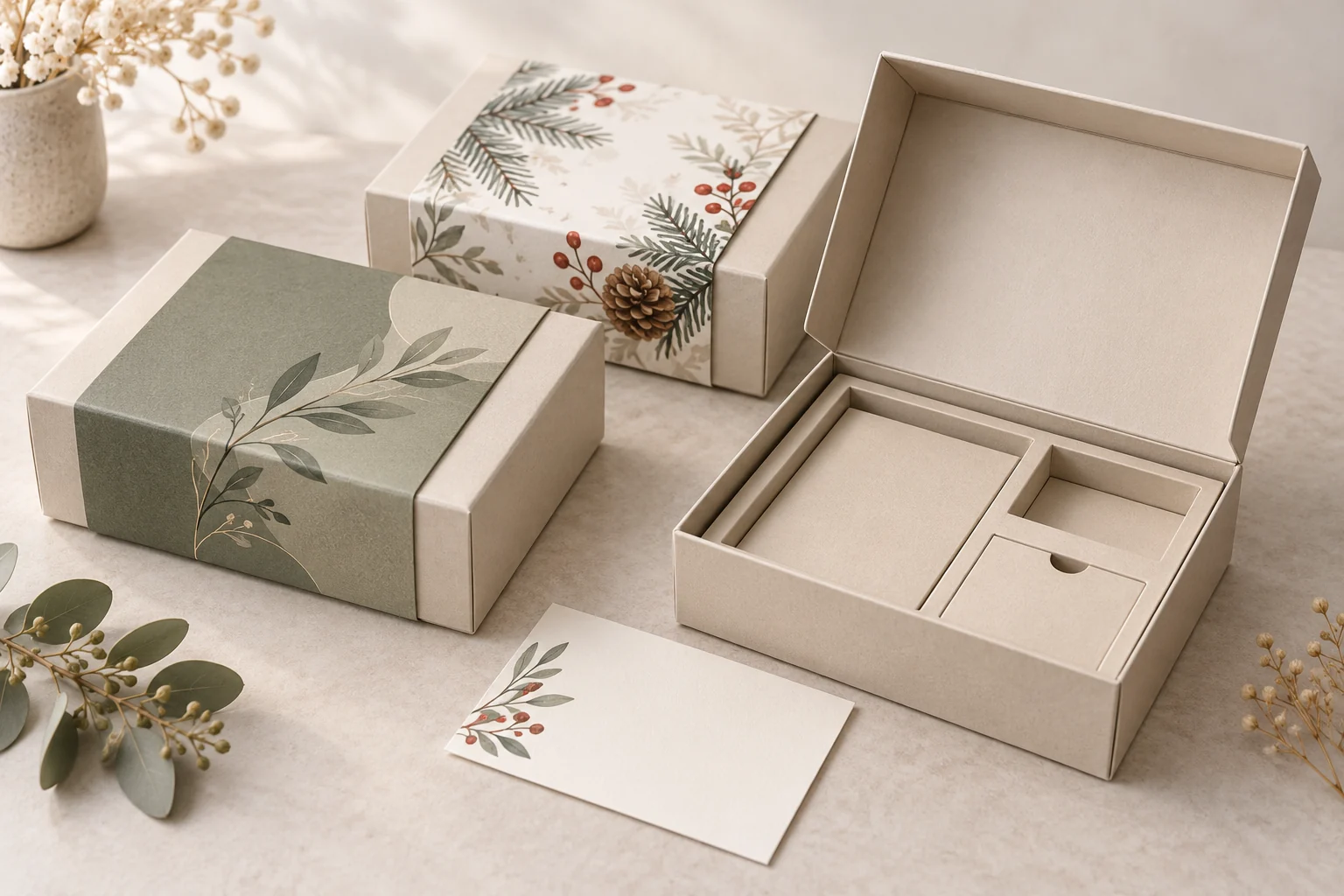
Personalize the part that needs to change—not automatically the whole box.
Personalized gift box packaging gives a brand a way to make a gift feel intended for a particular person, audience or occasion. The practical challenge is production: if every recipient needs a different name or message, does every box need a completely different structure and print run? Usually, the first design decision should be which component actually needs to vary.
For many programs, one consistent box paired with a changeable sleeve, belly band, message card or tag can carry the personal detail. This keeps the structural packaging brief stable while leaving room for seasonal editions or recipient-specific copy. Whether that is the right route depends on quantity, print process, packing labor, budget and how visible the personalization needs to be.
Customization vs. personalization: define the difference
These terms often overlap in marketing copy, but they create different production tasks:
Make it unmistakably yours
Apply a logo, brand colors, campaign artwork, print, paper choice or finish. The core version can remain the same for every recipient.
Make editions for audiences
Change the sleeve or insert card by season, market, product tier, event or recipient group—without creating an entirely new box for each one.
Add an individual detail
Print or add a name, short message, destination-specific note or other approved variable. This needs a data and proofing plan as well as artwork.
Separating these levels early helps prevent an avoidable design problem: approving a beautiful box concept before deciding how many versions must be printed, packed, tracked and shipped.
Four ways to add a personal touch to a gift box
Printed box and interior message
Use when every box belongs to the same campaign or product line. It creates one stable artwork version and works well for broad launches and standard gift sets. Review logo placement, color and any inside-lid messaging on a real sample.
Paper sleeve or belly band
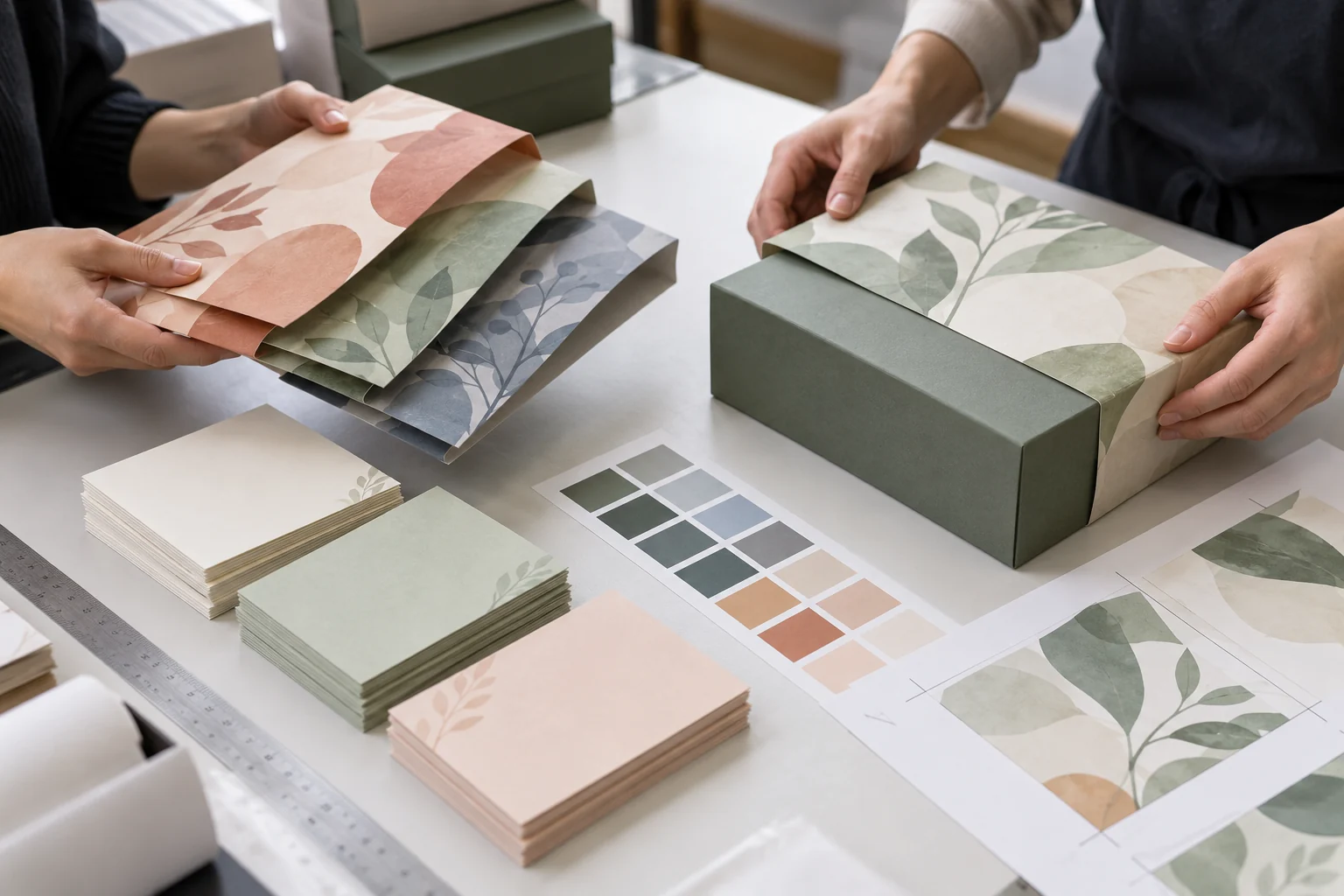
Keep the main box the same and vary the paper wrap for holiday, event, region or audience. This is useful when the outside needs a clear edition cue but the underlying box should remain consistent.
Card, tag or label
Add “To/From,” a short note or a recipient name on a separate component. It keeps the personal message close to the gift without putting every name on a large box surface.
Variable printed element
Ask whether the print supplier can handle sequential names or messages in the required process. Confirm file format, supported characters, proofing, quantity, version identification and handling of incorrect or duplicate entries.
These components are not automatically interchangeable. A sleeve must fit the selected box and stay put during handling; a card must be easy to insert without hiding product information; and individual names require accurate source data and a sign-off method. Review the box and any fitted insert together using the guidance in our custom packaging inserts guide.
Real examples: keep the structural idea, adapt the lesson
A useful packaging case study does not need to match your product exactly. It should show a decision that can be evaluated and adapted.
- Seasonal sleeve on a shared gift box: Hong Kong bakery A Little Happiness used a drawer-style pastry gift box with a printed sleeve and coordinated card; the manufacturer’s published case study says later Christmas and New Year editions changed the sleeve while retaining the box structure. This is an example of occasion-level variation, not individual names.
- Message-specific editions: In a separate Don Julio 1942 holiday sleeve project, packaging supplier Wynalda describes three sleeve messages—“Happy Holidays,” “Congratulations” and “Happy New Year”—using a common packaging concept. It shows group/message versions, not one unique box per recipient.
- Personalization at consumer-product scale: Coca-Cola’s official 2025 Share a Coke announcement describes names on bottles and cans, with a digital hub for further customization. That is not a gift-box case, but it illustrates how a personal detail can become a recognizable campaign feature when its content rules and customer experience are designed together.
The transferable idea is not “copy this finish.” It is to define what remains fixed and what changes. For branded gift packaging, a shared rigid box with a short run of printed sleeves may suit seasonal variants; recipient names may belong on a card; and a fully variable print program should only be selected after the printer confirms the process and proofing plan.
Build a version plan before artwork starts
For a multi-recipient program, make a simple version matrix and assign one person to maintain it. It should list the base box, every sleeve or card design, the recipient group or data range, artwork status, quantity per version, packing location and approval owner.
Example version matrix
- Base package: one approved box style, dimensions, material and insert
- Campaign artwork: one master logo file, color references and print areas
- Edition components: named sleeve/card files and the audience or occasion each serves
- Variable details: approved source data, spelling rules, character support and field limits
- Quantities: total pieces plus count per artwork version, including samples and overruns if needed
- Pack-out: which card or sleeve goes with each recipient group and how the packer verifies it
- Approval: proof owner, final artwork lock date and criteria for accepting the sample
Keep a single approved source for names and copy. Check for duplicates, missing fields, unexpected punctuation, long names, non-Latin characters if relevant, and differences in capitalization. If a recipient list contains personal data, agree with the supplier on who receives it, how it is transferred and how long it is retained; use only the information needed for production.
Personalize the experience without overloading the design
Personalization should help the recipient understand why this gift is for them. A clear name card or one thoughtful message can be more legible than several competing logos, ribbons and slogans. Give the product and opening sequence room to be seen; a message on the inside lid or on a card can complement the exterior instead of fighting it.
Texture, paper choice and a small tactile detail can support the moment, but finishes should be selected for the brand, print area and actual budget. The 2026 trend outlook from Innova Market Insights describes both “Packaged for You” and “Sensory Unboxing” as themes, alongside evidence-based sustainability. Treat this as a direction for design exploration—not proof that every audience wants the same finish or that a “green” claim is substantiated.
Proofing and quality checks for personalized gift packaging
Approve the structural box first, then check printed versions on the actual substrate and fit them to the selected box. For an individual message run, include representative samples of the longest text and any special characters. A file proof checks copy and layout; a physical proof checks color, paper, folds, fit and handling.
- Every name, message, language and punctuation mark matches the approved data.
- Text stays inside the safe area and clear of cuts, folds, seams and glue zones.
- Color and finish are reviewed under consistent lighting against the approved reference.
- The sleeve or band slides on correctly and does not cover required labels or product information.
- Cards and tags are paired with the correct recipient or audience group during pack-out.
- Final quantities reconcile by version, and the shipping plan keeps versions separated and identifiable.
For a gift set with several items, check the final contents and insert as well as the graphics. Our guide to gift box insert fit covers retention and removal, while the box measurement guide helps make sure the approved sleeve and box dimensions refer to the same finished structure.
Cost and timing: compare the whole program
Personalization can add artwork versions, print setups, proof rounds, picking steps or pack-out labor. It may also help a brand reuse a stable structure across more than one occasion. Neither outcome is automatic: compare the total campaign, not just the price of one sleeve or card.
When requesting a quote, separate the quantity of the base box from the quantity of each version. Ask how samples, make-ready, extra print versions, variable data and kitting affect cost and schedule. If your box type or order quantity is still undecided, our guides to custom gift box cost and gift box MOQ can help structure the comparison.
How Leo Paper Box can support a personalized box brief
Leo Paper Box develops custom paper packaging for brands and buyers. Share the product, intended recipients, box format, number of artwork versions and delivery plan so the packaging brief can distinguish what stays constant from what changes. Depending on the project, the conversation may cover a custom printed box, a rigid gift box, a magnetic box or a drawer box, plus sleeves, cards or other paper components as appropriate.
Variable-data production, material availability, minimum quantities and lead times are project-specific, so confirm them during quotation and sampling rather than assuming a process is available. Review our paper packaging capabilities and factory and quality process, then send your specifications through the quote request page.
Sources and real-world examples
- BM Pack, “A Little Happiness custom pastry gift box: one palmier box that changes with the season without a reprint” (September 9, 2026) — a supplier-published project example of seasonal sleeve changes on a shared box structure.
- Wynalda Packaging, “Don Julio Custom Box Sleeves” — a holiday packaging case using three message-specific sleeve designs.
- The Coca-Cola Company, “Iconic ‘Share a Coke’ is Back for a New Generation” (March 26, 2025) — official campaign background on names, packaging and digital customization; bottles and cans, not gift boxes.
- Innova Market Insights, “Top Global Packaging Trends 2026” (July 10, 2026) — trend context for personalization, intentional packaging and sensory unboxing.
Note: The cited brand and supplier examples are not Leo Paper Box projects and do not guarantee a particular cost, MOQ, production process or result. Confirm all specifications and production capabilities for your own packaging brief.