A subscription package has to work every month, not just once.
Subscription brands ship repeatedly to customers who expect the same level of protection and delight in every delivery. The package must protect a changing assortment, move quickly through fulfillment, fit the carrier route and remain recognizable as the brand evolves.
Subscription box packaging is therefore a system, not only a carton. The outer mailer, insert, information card, closure, packing order and repeat production plan all influence margin and the subscription box unboxing experience.
Why subscription box packaging is different
A one-time launch box can be judged by a single shipment. A subscription package is tested across dozens of recurring deliveries, seasonal assortments and fulfillment cycles. Small issues such as a loose product, a slow packing step or an oversized carton can multiply across every order.
Start by mapping the real operating conditions: product variations, monthly quantity, storage space, packing labor, shipping service, return policy and how often the artwork or insert will change.
Choose the outer format around the route
A self-locking corrugated mailer is often a strong starting point for direct-to-consumer delivery because it can combine closure, print and shipping protection in one format. A corrugated shipper may suit heavier or more fragile products. A folding carton inside a shipper can separate presentation from transit protection.
Rigid, drawer or reusable formats may be appropriate for a premium membership or a gift subscription, but the decision should reflect the actual route and repeat cost. Compare custom mailer boxes with custom paper boxes before the artwork is finalized.
Start with the packed contents
Measure the smallest and largest monthly assortment, including bottles, jars, boxes, books, textiles and any protective wrap. Record product weight, fragility, liquid risk, orientation requirements and the space needed for cards or samples.
Designing around the product range prevents a common problem: a beautiful subscription box that works for one month but leaves the packing team improvising when the assortment changes.
Right-sizing protects recurring margins
Oversized packaging can increase carrier charges, void fill, storage footprint and the number of cartons that must be handled. Undersized packaging can create product damage, slow packing and replacement orders. A right-sized box balances clearance, insert thickness, closure and practical packing tolerances.
Build a few size options and test the packed dimensions against the intended carrier service. A small change in height or footprint can make a meaningful difference when it repeats across every delivery.
Use inserts to control movement
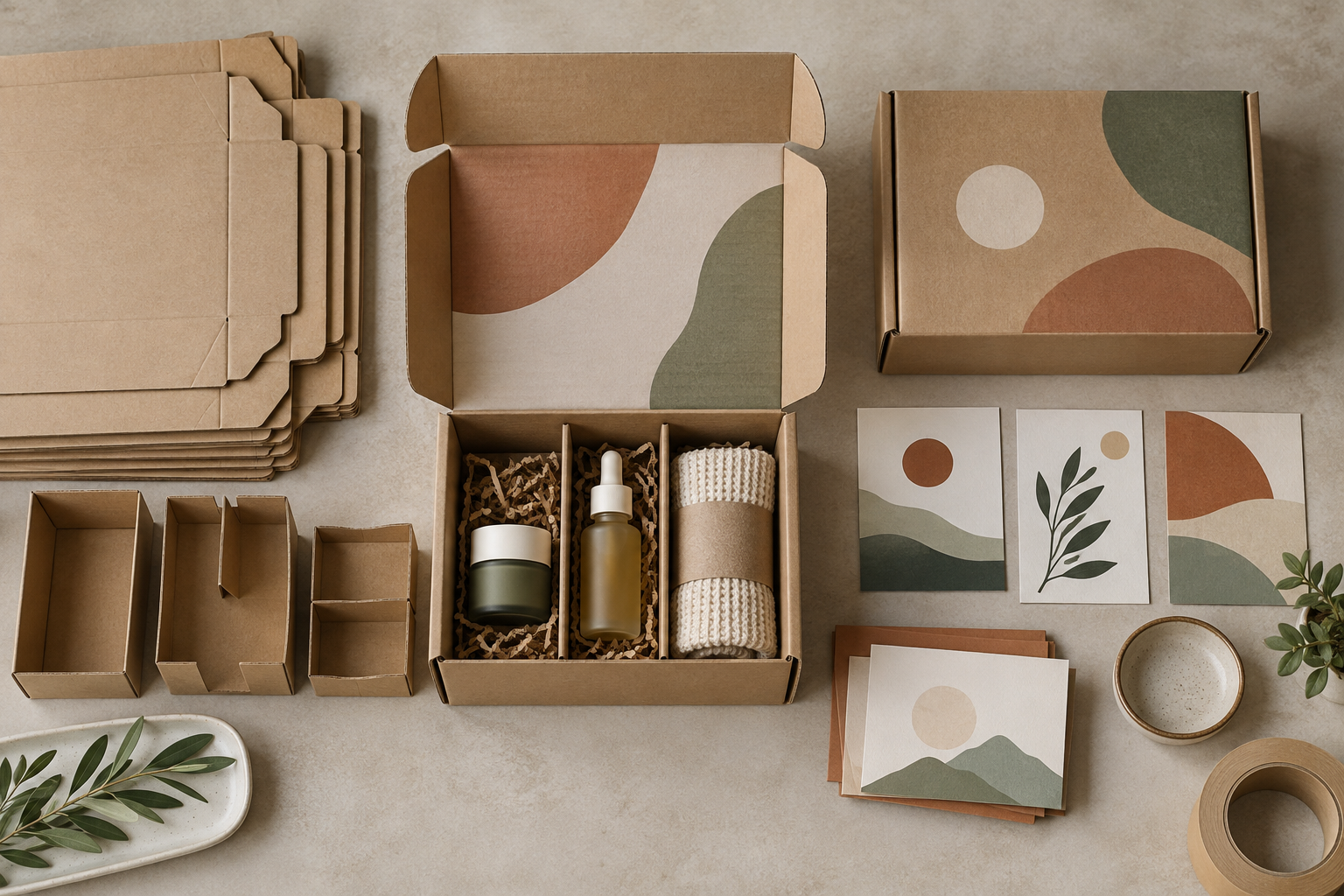
Custom ecommerce packaging inserts can keep products separated, prevent rattling and make the unboxing sequence feel intentional. Corrugated partitions suit heavier items, folded paperboard can create efficient compartments, and molded paper can hold shaped or fragile products.
For changing assortments, consider a modular insert. A stable outer grid with interchangeable dividers or platforms can support several monthly combinations without replacing the full mailer. Test the insert with the real product surfaces and labels to avoid scuffing.
Design a repeatable unboxing sequence
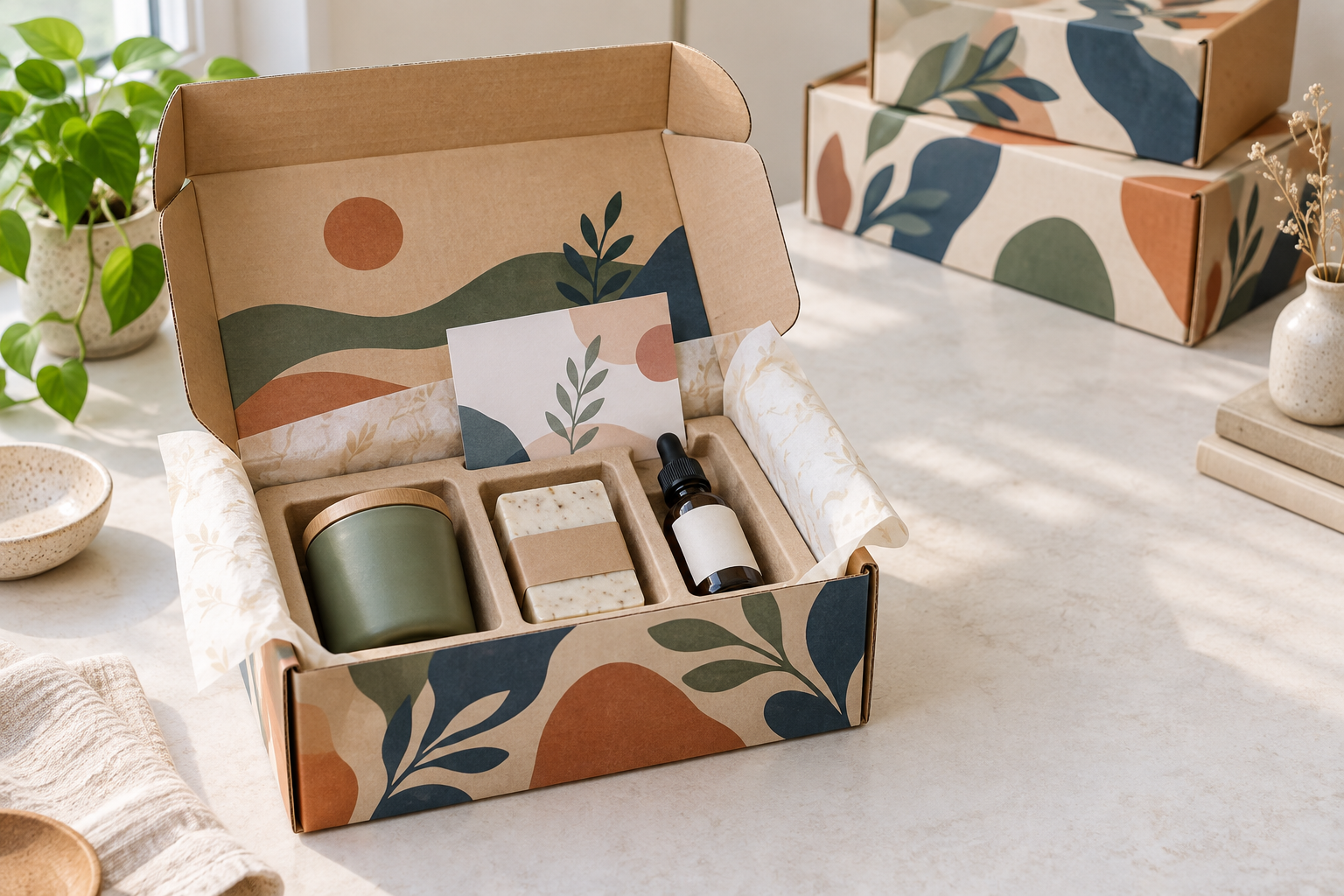
The opening moment should be easy to understand and easy to reproduce. A useful sequence might be: outer mailer, closure, inside-lid message, first card, product layer, usage information and disposal guidance. The order should work whether the customer opens the package at home, at a desk or as a gift.
Use the inside lid, a paper band or a card to create hierarchy. Avoid burying the first useful message beneath loose filler. A clear sequence helps the package feel more premium while reducing unnecessary components.
Make inserts a communication channel
The insert or card can explain what is inside the box, how to use each item, what is seasonal and where to find a tutorial. A QR code can connect the physical package to a product page, how-to video, referral offer or account area.
Keep the information useful and easy to update. If the product selection changes monthly, a replaceable card or small printed panel may be more efficient than reprinting the entire outer box.
Keep variations consistent without making them identical
Subscription plans often have different sizes, price levels or product themes. A consistent outer format, color logic and opening sequence can make the program recognizable, while cards, stickers, sleeves or small insert modules distinguish the plan or month.
This approach reduces the number of structural specifications that must be approved and stored. It also helps the fulfillment team learn one packing system instead of several unrelated boxes.
Design for the packing team
Walk through the packing sequence with the people who will assemble the orders. Check whether the mailer opens flat, whether the insert orientation is obvious, whether products can be picked quickly and whether cards or samples have a defined location.
- Use a clear pack order.
- Make product orientation visible.
- Reduce unnecessary tape and filler.
- Leave room for labels and carrier handling.
- Test the close and seal after a full pack.
A package that is fast to pack is often more reliable and more profitable than one with a complicated reveal.
Plan for shipping, returns and replacements
Subscription packaging should account for real delivery conditions, not only studio photography. Test compression, drops, vibration, moisture exposure and the way products sit after transit. If customers may return or exchange products, decide whether the mailer can be resealed and whether the insert survives the first opening.
Protection is part of sustainability too. Preventing breakage and replacement shipments can save material and cost across the program.
Make repeat production predictable
Share the expected monthly usage, launch date, storage plan, artwork schedule, quantity range, delivery split and master-carton requirements with the packaging supplier. Our guide to gift box MOQ can help separate the sample, pilot and repeat order. For a full cost comparison, see custom gift box cost.
Keep the approved dieline, board, print files, insert drawing and packing instructions together. This makes seasonal artwork or product changes easier to manage without losing the structural baseline.
How Leo Paper Box supports subscription packaging
Leo Paper Box develops custom paper packaging for ecommerce brands, subscription programs, retailers and distributors. We can help compare mailers, shipping boxes, presentation cartons, paper inserts and printed cards around the actual product range.
Review our packaging capabilities and factory and quality process, then send the packed dimensions, monthly quantity and delivery plan through the quote request page. The right first sample should prove protection, packing speed and the unboxing experience together.