
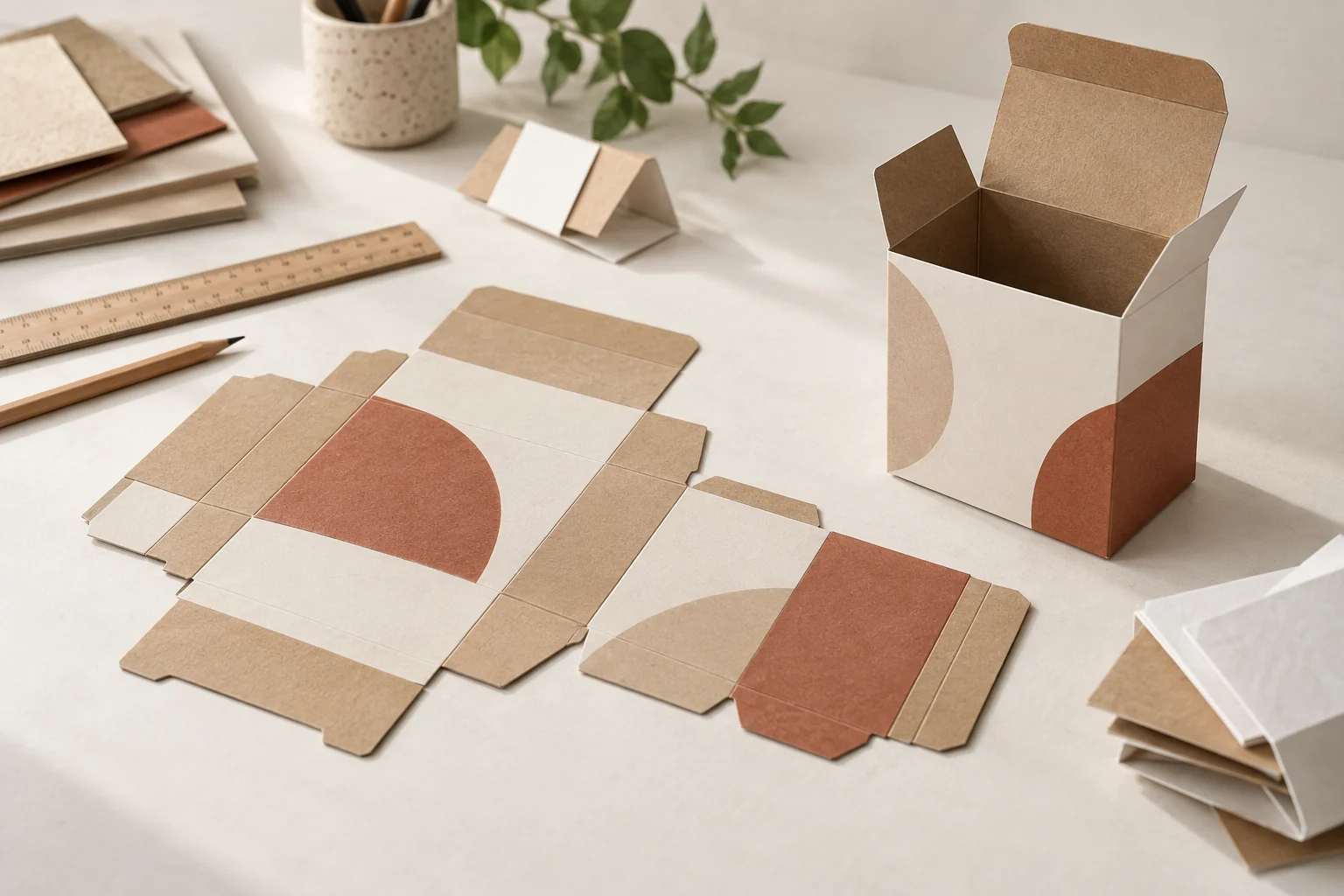
How to make a paper box: understand the job before cutting paper.
There are two different jobs hidden inside the question how to make a paper box. You may want a quick paper mock-up for a school project, product concept or gift. Or you may need a repeatable package that protects a product, carries artwork and can be produced in hundreds or thousands of pieces.
This guide covers both, but keeps the distinction clear: a hand-made mock-up helps you test an idea; a commercial folding carton needs an approved paper box dieline, suitable board, controlled printing, die-cutting, creasing, folding, gluing and quality checks. For a reliable starting point, first review how to measure a box and record the product as it will actually be packed.
1. Measure the product and define the inside dimensions
Measure the product in its packed orientation, not only its longest side. Record length, width, height, weight, fragile areas, required orientation and any insert, card, sleeve or protective wrap. Use internal dimensions for fit. Use external dimensions later for storage, pallet and shipping planning.
Do not add a universal allowance such as “two millimeters for every box.” Clearance depends on the board caliper, product tolerance, insert, closure and whether the box is hand-packed or machine-packed. Build the first sample around a stated internal target, then confirm the clearance with the real product.
2. Choose a box structure that matches the product
Common paper packaging structures include tuck-end folding cartons, auto-lock bottom boxes, mailer boxes, sleeve-and-tray boxes, lid-and-base boxes and rigid or magnetic gift boxes. A light retail item may suit a printed folding carton. A heavier product or direct-to-consumer route may need corrugated protection or a separate shipper.
Look at the opening, stacking, packing speed and shipping route together. Explore custom paper boxes for folding-carton directions, custom mailer boxes for direct shipping and magnetic gift boxes when the presentation and reuse of the box are central to the brief.
3. Select board, caliper and grain direction
Paperboard is not the same as ordinary copy paper. The board must hold its shape at the chosen size, accept the planned print and finish, and fold without cracking or losing the closure. The correct choice depends on dimensions, product weight, stacking, moisture exposure, shipping and local material requirements.
Folding cartons are commonly made from paperboard in a range of calipers; the Paperboard Packaging Council describes typical folding-carton board in the 10–36 point range, but that is a reference range rather than a universal specification. A packaging supplier should confirm the board and grain direction through a sample and converting review.
4. Build and approve the paper box dieline
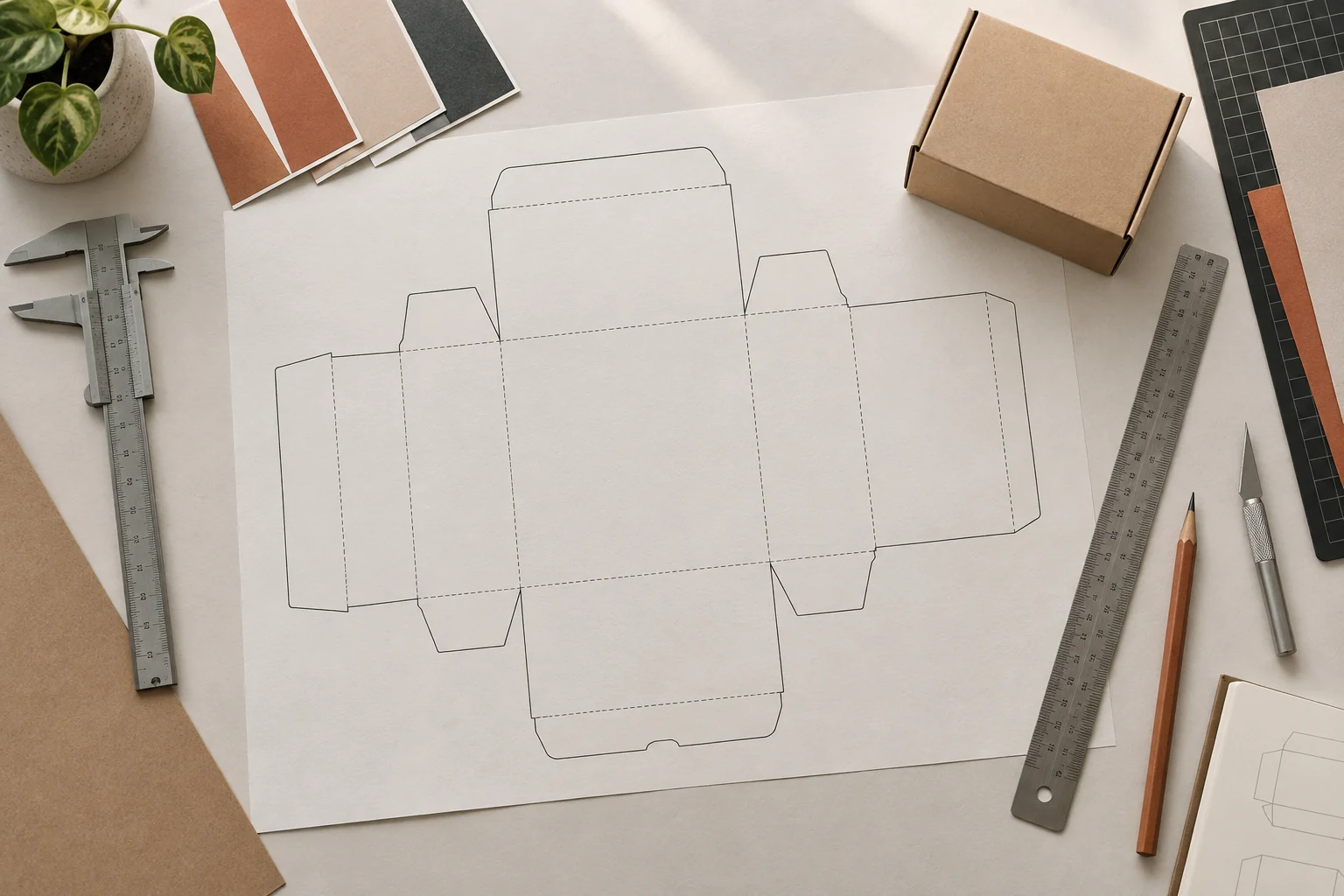
A paper box template is useful for learning panel order, but a production dieline must describe the actual converting work. It should show the outside cut outline, crease or fold lines, glue flaps, bleed, safe areas, panel orientation and any window, perforation or tear feature. The dieline should also account for board caliper and grain direction.
Keep the dieline as a structural file and place artwork on a separate layer. Do not move cut or crease lines to make artwork fit. Ask the supplier to issue or approve the final dieline for the selected board and machine before creating the finished print file. Netpak’s die-cutting guidance also highlights cut lines, score lines, glue flaps, bleed and safe zones as core dieline information.
5. Prepare artwork for print
Place logos, product information, barcode, legal copy and opening messages according to the approved panel map. Keep important text away from cuts, creases and glue areas. Use the color mode, spot colors, bleed and file format requested by the printer; there is no safe universal bleed value for every process.
Before approval, print a flat proof at scale or use a structural sample to check panel orientation. This catches an upside-down side panel, hidden logo or barcode on a glue flap before production. For branded packaging, see custom boxes with logo.
6. Print and choose finishes for a reason
Digital printing can be useful for prototypes or shorter runs. Offset, flexographic and other processes may suit different board types, quantities and color requirements. The supplier should recommend the process after the structure, board and quantity are known.
Coating, matte or gloss varnish, foil, embossing and soft-touch effects can change both appearance and handling. Select finishes that support the product and route. A finish that looks good in a photo still needs to survive folding, rubbing, packing and delivery.
7. Die-cut, crease, fold and glue the blank
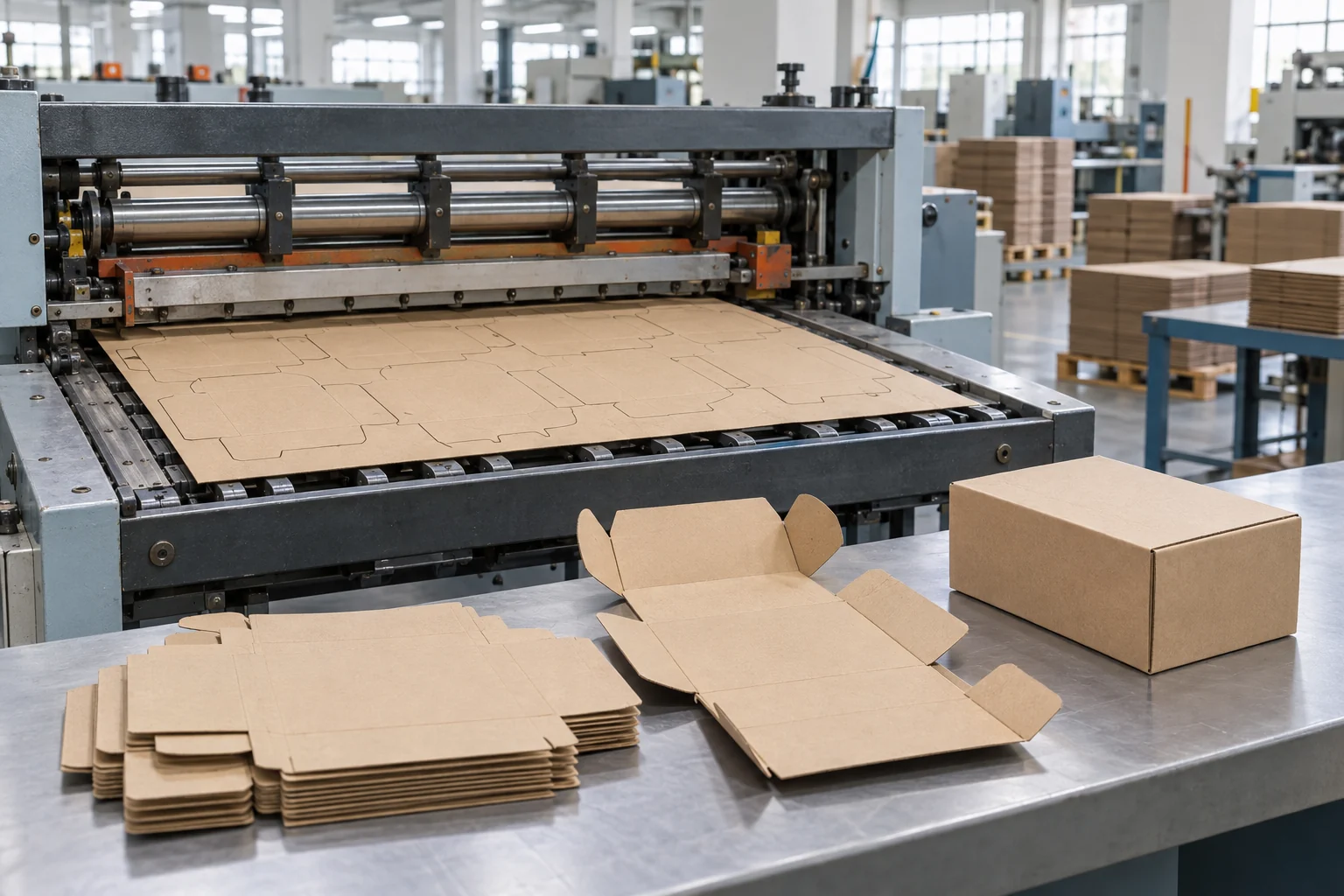
Commercial folding cartons are normally converted from printed sheets using a die with cutting and creasing rules. The flat sheet is cut into the approved blank, creases are formed to guide folds, and the blank is folded and glued in the specified sequence. A simple box may use one glue flap; a more complex structure may need more assembly or an insert.
For a hand prototype, use a printed or plain blank, score fold lines with a blunt tool, cut on a suitable mat, fold the panels and glue the tabs. Keep the blade, scoring tool and adhesive away from children and follow the tool manufacturer’s safety guidance. A hand prototype tests the idea; it does not replace the production die or machine sample.
8. Test the sample before scaling the order
Pack the real product into the real sample. Check fit, clearance, closure, opening force, panel orientation, insert movement, print position and finish scuffing. If the box will ship, test the packed package against the likely handling conditions, such as compression, drops, vibration and moisture exposure where relevant.
Approve a pilot or pre-production sample before bulk production. Record the approved board, dimensions, artwork, colors, finish, insert and packing sequence. This creates a useful baseline for repeat orders and helps separate a design change from a manufacturing issue.
How to make a paper box by hand for a quick prototype
- Place the product or a scale model on paperboard and mark the required internal panels.
- Extend adjacent panels and add glue tabs where the structure needs them.
- Mark fold lines separately from cut lines so the folding sequence is clear.
- Cut the outside shape on a cutting mat, then score the fold lines with a blunt tool.
- Fold the blank, check the product fit and glue the tabs one at a time.
- Write the internal dimensions, board used and changes on the prototype before sharing it.
For a cleaner result, use a simple tuck-end or sleeve structure first. If the prototype needs a fitted insert, window, magnetic closure or heavy product, move to a packaging supplier earlier rather than forcing a hand template to behave like a production carton.
What to send a paper box manufacturer
- Product dimensions, weight, orientation and photos.
- Target internal dimensions and any insert, card or protective wrap.
- Preferred structure, opening experience and shipping route.
- Artwork, logo files, required copy and barcode information.
- Board, finish, color or sustainability preferences.
- Sample quantity, target production quantity and delivery date.
A complete brief helps the supplier compare a paper box, folding carton, rigid box or mailer fairly. Review our packaging capabilities and factory and quality process, then send the specification through the quote request page.
Technical references
This guide follows established packaging concepts rather than treating one template as universal. For further reading, see the Paperboard Packaging Council overview, Netpak’s dieline and die-cutting guide and ASTM D2658 on package dimensions.