Premium packaging is becoming more considered, not simply more elaborate.
Luxury packaging is changing. Brands still want a memorable opening moment, but buyers, retailers and ecommerce teams are asking harder questions about material use, shipping space and what happens after the gift is opened.
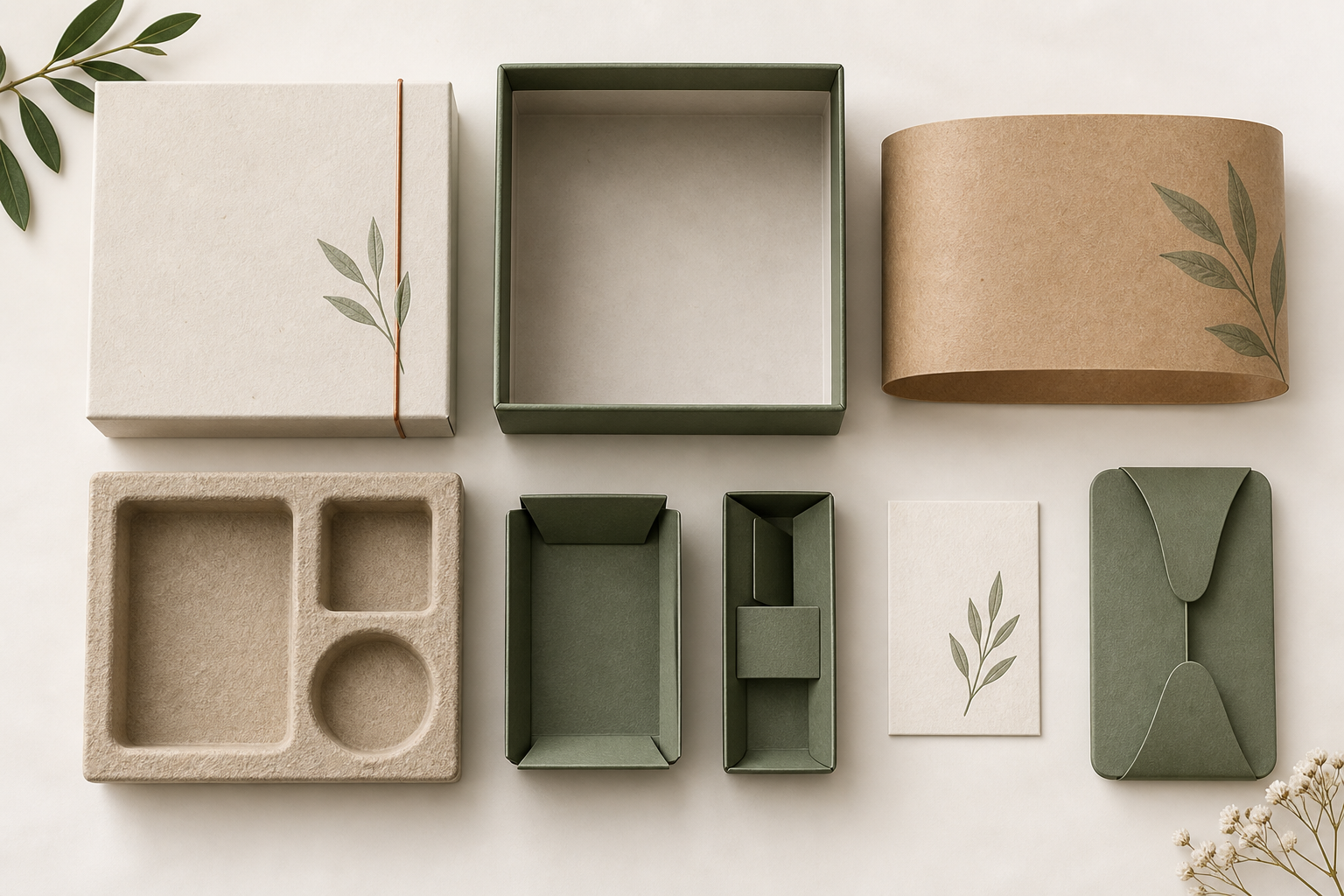
Sustainable luxury packaging starts with the complete system: the outer box, lid, insert, sleeve, tissue, card, sticker, shipper and any filler. A premium result can come from good proportions, tactile paper, a precise fit and one or two carefully selected finishes rather than layers of unnecessary materials.
Why sustainable luxury packaging matters in 2026
Sustainability is now part of the packaging brief for many premium brands. Customers want packaging that feels responsible, retailers want more efficient storage and fulfillment teams want fewer awkward components. New packaging rules and retailer requirements also make vague environmental claims harder to defend.
The practical opportunity is to make sustainability visible through better design decisions: a box that fits the product, a paper insert that can be removed, a closure that does not add unnecessary complexity and a material specification that the buyer can understand.
Start with the packaging system, not the decoration
Before choosing foil or specialty paper, list every component that reaches the customer. Include the presentation box, protective shipper, inner tray, insert, tissue, card, adhesive, magnet, label and void fill. Then ask what each part does.
- Does it protect the product?
- Does it guide the unboxing sequence?
- Does it communicate useful information?
- Does it make packing, storage or shipping easier?
If a component has no clear job, test the package without it. This simple audit often reveals where sustainable gift box packaging can become lighter and easier to recycle without losing its premium feel.
Choose paper-based materials according to the product
There is no single “best” paper material for every gift box. A rigid board construction can create a strong presentation for heavier products, while folding carton board can be more efficient for light items. Corrugated board is useful when the package must travel through parcel networks, and molded fiber can provide a shaped cradle for fragile products.
Compare the packed product weight, fragility, shipping route, print requirements and storage conditions before choosing. Leo Paper Box can develop custom paper gift boxes and rigid gift boxes around those constraints.
Use the insert to improve protection and material efficiency
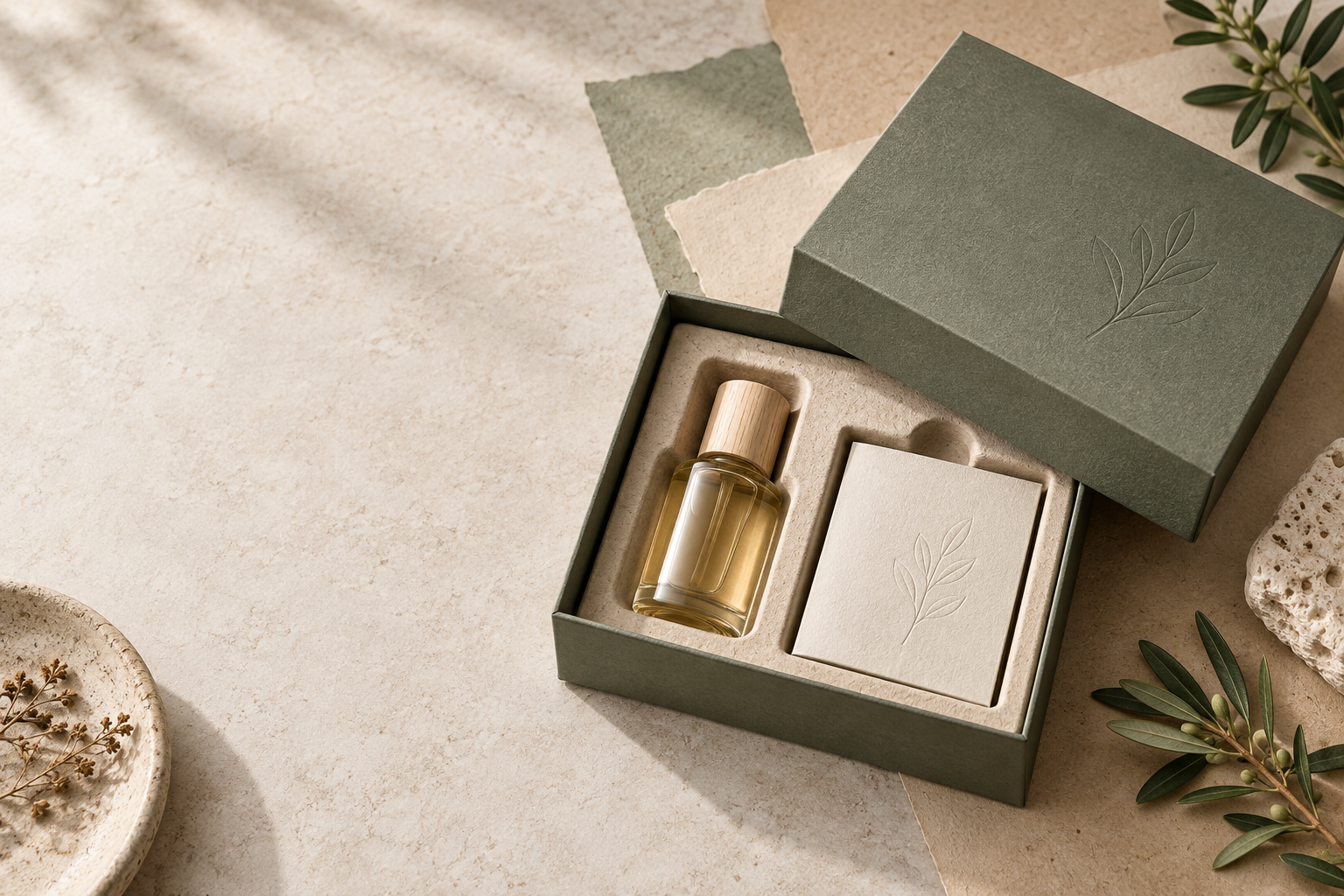
An insert should do more than make the box look full. It should hold the product in a stable position, prevent contact between items and make the packing order easy to repeat. Paperboard dividers, folded compartments, molded fiber trays and corrugated supports can all be useful depending on the product.
Test the actual product, not only an approximate dummy. Check clearance, closing pressure, drop performance, scuffing and whether the insert can be removed for disposal or reuse. A well-fitted insert can reduce the need for loose filler and oversized outer packaging.
Use premium finishes selectively
Luxury does not require every available effect. A well-chosen paper texture, restrained embossing, a small foil detail or a carefully printed interior can create more value than a heavily decorated package.
When requesting a quote, compare the finish against the complete structure. Our guide to custom gift box cost explains why board, setup, finishing, quantity and assembly all affect the final direction. If the package will be shipped, also consider scuff resistance and how the surface looks after handling.
Right-size the box for retail and ecommerce
A box that is larger than the product can increase material use, filler, storage space and freight cost. A box that is too tight can damage the product or make the opening feel frustrating. Right-sizing means allowing practical clearance for the product, insert and closure while keeping empty volume under control.
For ecommerce, test the packed dimensions against the actual shipping service. For retail, consider shelf footprint, stacking, display orientation and master-carton efficiency. The same visual identity can be adapted to a presentation box and a more efficient mailer when the routes are different.
Design for disassembly and local recycling
Recyclability is easier to understand when the package can be separated into recognizable parts. Consider whether the insert can be removed, whether a sleeve comes off cleanly and whether magnets, laminated surfaces or mixed-material closures complicate disposal.
Paper-based does not automatically mean recyclable in every local system. Ask for the actual board, coating, adhesive and closure specification, then communicate the claim precisely. This is the foundation of credible eco-friendly luxury packaging.
Build a second life into the box
A rigid box can continue to be useful after the gift is opened. Jewelry, stationery, keepsakes, cables and small desk items are natural second-life uses. A drawer, magnetic or lid-and-base construction can make reuse intuitive if the proportions and opening experience are pleasant.
Reuse should support the product story rather than become an excuse for an oversized box. Review magnetic gift boxes when a durable presentation format makes sense, and compare it with a lighter structure when shipping efficiency is the priority.
Be precise with sustainability claims
Use specific, supportable language in the packaging brief and product communication. Name the material, identify the relevant component and explain the intended disposal route when documentation is available. Avoid broad phrases such as “100% eco-friendly” when the complete package has not been assessed.
A clear specification also makes supplier comparison easier. It gives the production team something concrete to sample, test and repeat rather than a marketing promise that can mean different things to different people.
Test the complete package before production
The sustainability decision is not complete until the package works in the real world. Test product fit, closure, drop and compression protection, insert removal, surface scuffing, storage, master cartons, delivery route and the customer’s disposal experience.
Keep the approved sample, artwork, board, insert drawing and finish references together for the repeat order. A stable specification helps the team reduce waste caused by avoidable rework.
How Leo Paper Box supports sustainable packaging development
Leo Paper Box develops custom paper packaging for brands, retailers, gifting companies and overseas buyers. We can help compare board, structure, inserts, finishes and shipping requirements as one packaging system.
Review our custom paper box manufacturing capabilities and factory and quality process, or send the product dimensions and delivery plan through the quote request page. A clear brief is the fastest way to compare a recyclable rigid gift box, a folding carton or a shipping-friendly mailer.